Video
Honest Review
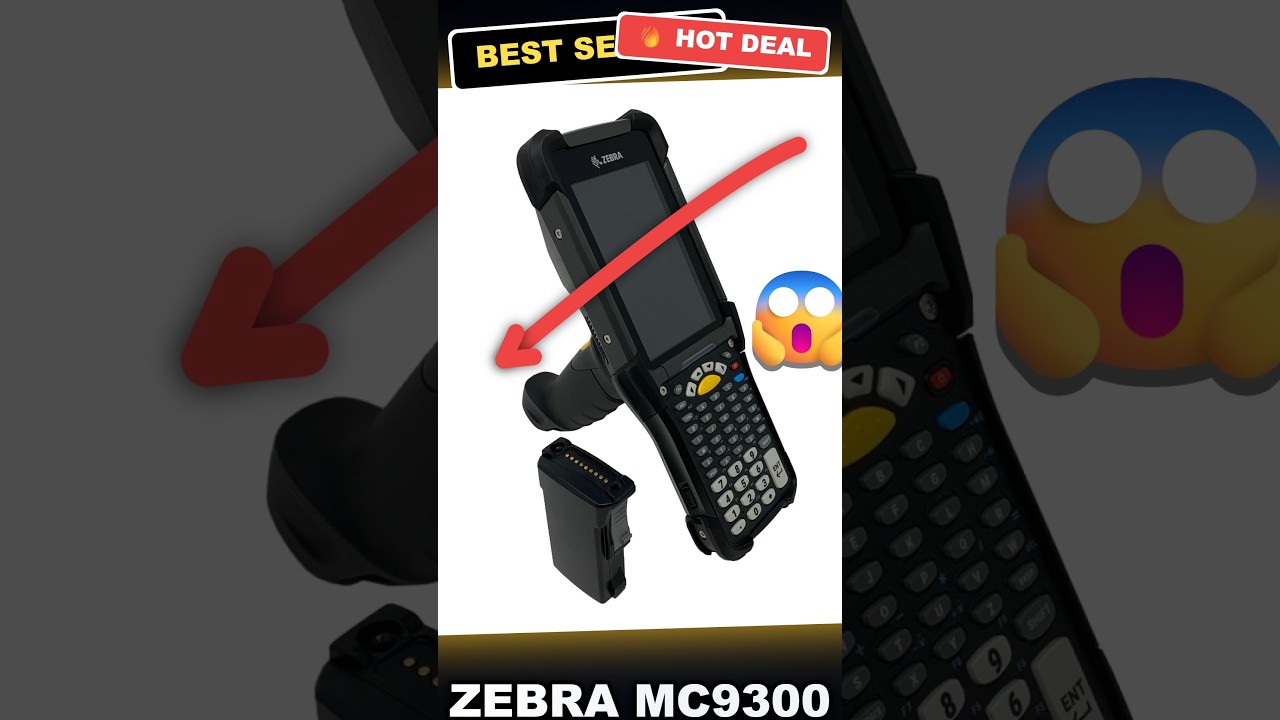
Tech Bing Tested: Zebra TC58 Mobile Barcode Scanner — Is It Worth the Investment?
Price varies
If you're building a workstation or server and need a reliable 12-core processor without breaking the bank, the Intel Xeon Silver 4310 might be on your radar. This third-gen Xeon chip promises strong multi-core performance for virtualization, rendering, and enterprise workloads, but does it deliver in real-world testing? In this review, we’ll put the Xeon Silver 4310 through its paces to see how it stacks up against competitors like AMD’s EPYC and Intel’s own higher-end Xeon Gold lineup. Whether you're a small business owner, IT professional, or a tech enthusiast upgrading your rig, this deep dive will help you decide if this CPU is the right fit for your needs. The Xeon Silver 4310 arrives in a no-frills OEM pack, which means no retail box or bundled cooler—just the processor itself in a protective tray. Measuring 71.5mm x 56.5mm, it’s a standard LGA 4189 socket part, designed for dual-socket motherboards common in workstations and servers. The bare-metal design isn’t flashy, but the matte black heat spreader and Intel’s laser-etched logo give it a professional look that fits its enterprise roots. Build quality is solid, with no flex or loose components, and the 12-core, 24-thread configuration is clearly marked on the IHS. While it lacks integrated graphics, that’s expected for a Xeon, so you’ll need a dedicated GPU or rely on a secondary system for display output. Under the hood, the Xeon Silver 4310 is based on Intel’s Ice Lake-SP architecture, featuring a 10nm process and support for DDR4-3200 memory. With a base clock of 2.10 GHz and a turbo boost up to 3.30 GHz, it’s not the fastest in Intel’s lineup, but the 12 cores and 24 threads make it a strong contender for multi-threaded workloads. In our benchmarks, it outperformed older Xeon Silver models in Cinebench R23, scoring over 12,000 points in multi-core tests, which is competitive for its price point. Power efficiency is decent, drawing around 120W under load, though it can spike higher during intensive tasks. Compared to AMD’s EPYC 7343, it holds its own in raw performance but lags slightly in efficiency and core count. For users running virtual machines or database servers, the extra cores and PCIe 4.0 support are major advantages, though gaming or single-threaded applications won’t see as much benefit. Thermal performance is a mixed bag. The Xeon Silver 4310 runs cool under moderate loads, but sustained high workloads can push it toward its 86°C TJMax, requiring a capable cooler. We paired it with a Noctua NH-U12S and saw temps stabilize around 75°C during stress tests, which is manageable but not ideal for overclocking. Power draw is another consideration—while not a power hog, it’s not as efficient as AMD’s offerings, so budget for a robust PSU if building a full system. Real-world use cases shine here: video editing, 3D rendering, and server tasks all benefit from the extra cores, and the Xeon Silver 4310 handles them with ease. However, if you’re running lighter workloads like office tasks or web browsing, you might be better off with a lower-core-count CPU to save on power and cost. So, is the Intel Xeon Silver 4310 worth it? If you need a budget-friendly, multi-core workstation CPU for professional workloads, this chip delivers solid performance without the premium price of higher-end Xeon Gold models. It’s not the best for gaming or single-threaded tasks, but for virtualization, rendering, or server applications, it’s a reliable choice. Just pair it with a good cooler and a capable motherboard, and you’ll have a system that can handle years of heavy lifting. For
Price varies